
Australia’s LNG Strategy: What It Means for Jobs, Employers, and Students
Australia uses LNG exports to secure fuel amid shortages. Explore job trends, employer impact, and career opportunities in energy and logistics sectors.

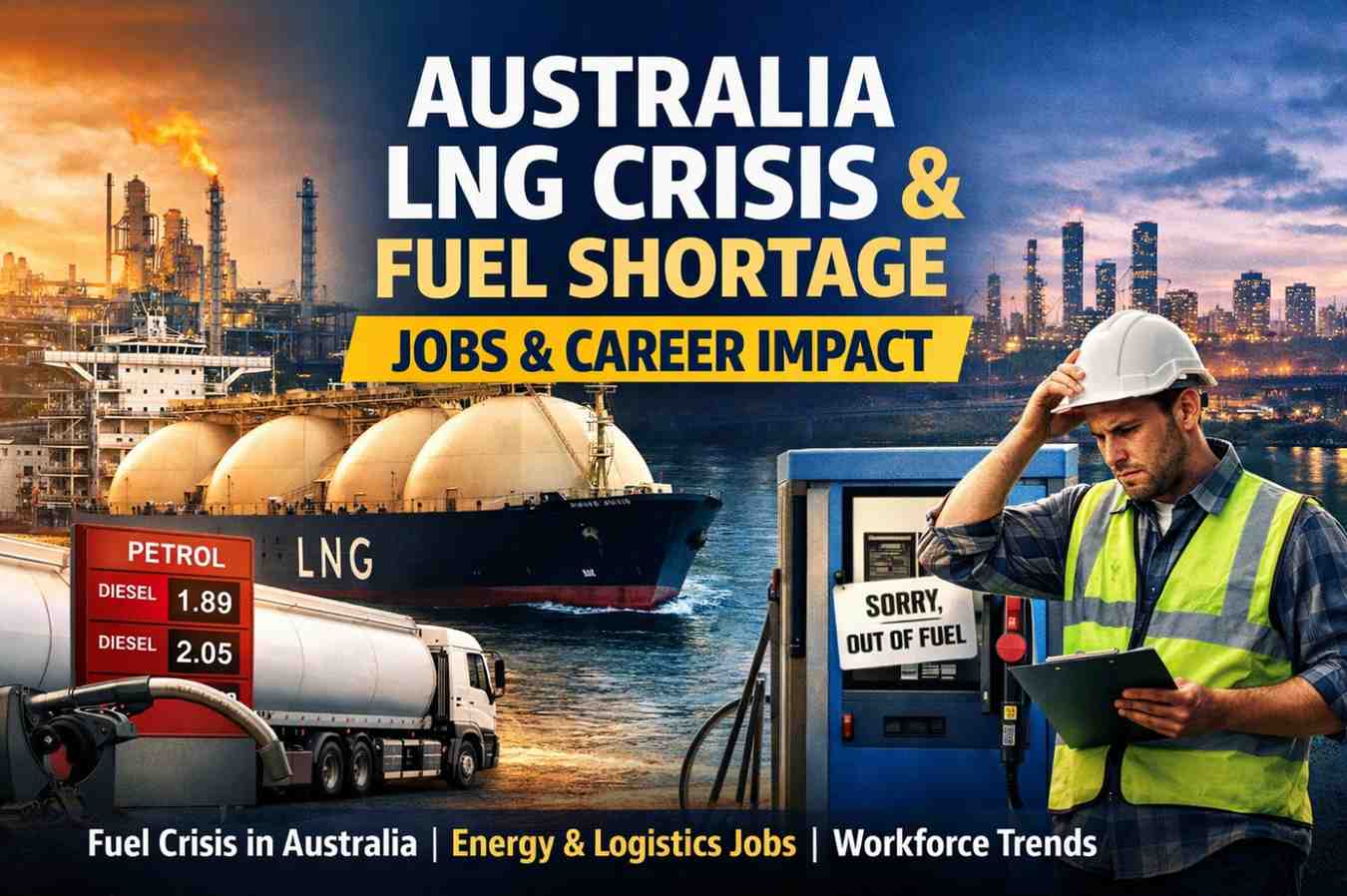
Australia’s decision to leverage its liquefied natural gas (LNG) exports to secure fuel imports from Asia is not only a geopolitical development but also a significant workforce and employment trend.
With fuel shortages triggered by global conflict and supply disruptions, multiple industries such as transport, logistics, mining, and agriculture are experiencing operational pressure. This shift is creating both challenges and opportunities in the job market.
What Is Happening
Australia exports large volumes of LNG to Asian countries including Japan, South Korea, Singapore, and Malaysia. However, it relies heavily on imported refined fuels such as petrol and diesel.
Due to global tensions and disruptions:
- Fuel prices have increased significantly
- Fuel shortages are emerging across regions
- Industrial operations are being impacted
In response, Australia is strengthening diplomatic and trade relationships to ensure fuel supply reliability by leveraging its LNG export position.
Impact on Employers
This situation is directly influencing hiring trends and workforce strategies.
High-Demand Roles
- Supply Chain Managers
- Logistics Coordinators
- Energy Analysts
- Procurement Specialists
- Fuel Distribution Managers
Employer Challenges
- Increased operational costs due to fuel price volatility
- Supply chain disruptions affecting delivery timelines
- Need for stronger risk management and contingency planning
Strategic Insight
Employers should focus on:
- Diversifying suppliers and sourcing strategies
- Hiring professionals with expertise in energy markets
- Investing in digital tools for logistics and supply chain tracking
Opportunities for Students and Job Seekers
The current energy situation is opening new career pathways, particularly for students and early professionals.
Emerging Career Areas
- Energy and LNG sector roles
- Supply chain and logistics management
- International trade and policy
- Data analysis and forecasting
Key Skills in Demand
- Risk management and problem-solving
- Understanding of global trade systems
- Data analytics and forecasting
- Knowledge of sustainability and energy transition
Students who develop these competencies will have stronger employment prospects in a changing market.
Global Significance
Recent disruptions caused by geopolitical tensions and LNG supply interruptions are reshaping global energy flows. Countries such as Japan and South Korea are reassessing their energy sourcing strategies, potentially strengthening Australia’s position as a reliable supplier.
This shift may lead to:
- Increased export demand
- Growth in energy-related employment
- Expansion of regional trade opportunities
Structural Challenges in Australia
Despite being a major LNG exporter, Australia faces internal vulnerabilities:
- More than 80 percent of refined fuel is imported
- Only two operational oil refineries remain
This creates long-term demand for:
- Domestic refining and energy infrastructure roles
- Energy policy and regulatory professionals
- Supply chain resilience specialists
SearchTalents Insight
This development represents a significant shift in the employment landscape.
For employers, it is an opportunity to build resilient teams with expertise in energy and logistics.
For students and job seekers, it highlights the importance of aligning skills with high-growth sectors such as energy, supply chain, and global trade.
Explore Opportunities
Discover roles in energy, logistics, and operations on SearchTalents:
Browse Jobs on SearchTalents
Sources
- Bloomberg Energy
- Reuters Commodities and Energy News
- ABC News Australia – Energy Coverage
- Financial Times – Energy Sector News
- The Guardian Australia – Energy News
- The Australian – Energy & Resources
- S&P Global Commodity Insights
- CNBC – Energy News
- Al Jazeera – Energy News
- IEA – International Energy Agency Reports
#AustraliaLNG #EnergyCrisis #LNGExports #FuelShortage #EnergyJobs #SupplyChainCareers #LogisticsJobs #OilAndGasCareers #EnergySector #GlobalTrade #JobMarketTrends #HiringTrends #EmployerInsights #StudentCareers #CareerGrowth #SearchTalents #WorkforceTrends #EnergyIndustry #JobsInAustralia #FutureOfWork