
Trump Walks Back Tariff Threat on European Nations Over Greenland Dispute
Donald Trump withdraws tariff threats against European nations after Greenland dispute talks with NATO, easing trade tensions and diplomatic uncertainty.

By shubham –searchtalents.co, Mohali, Punjab, Indi
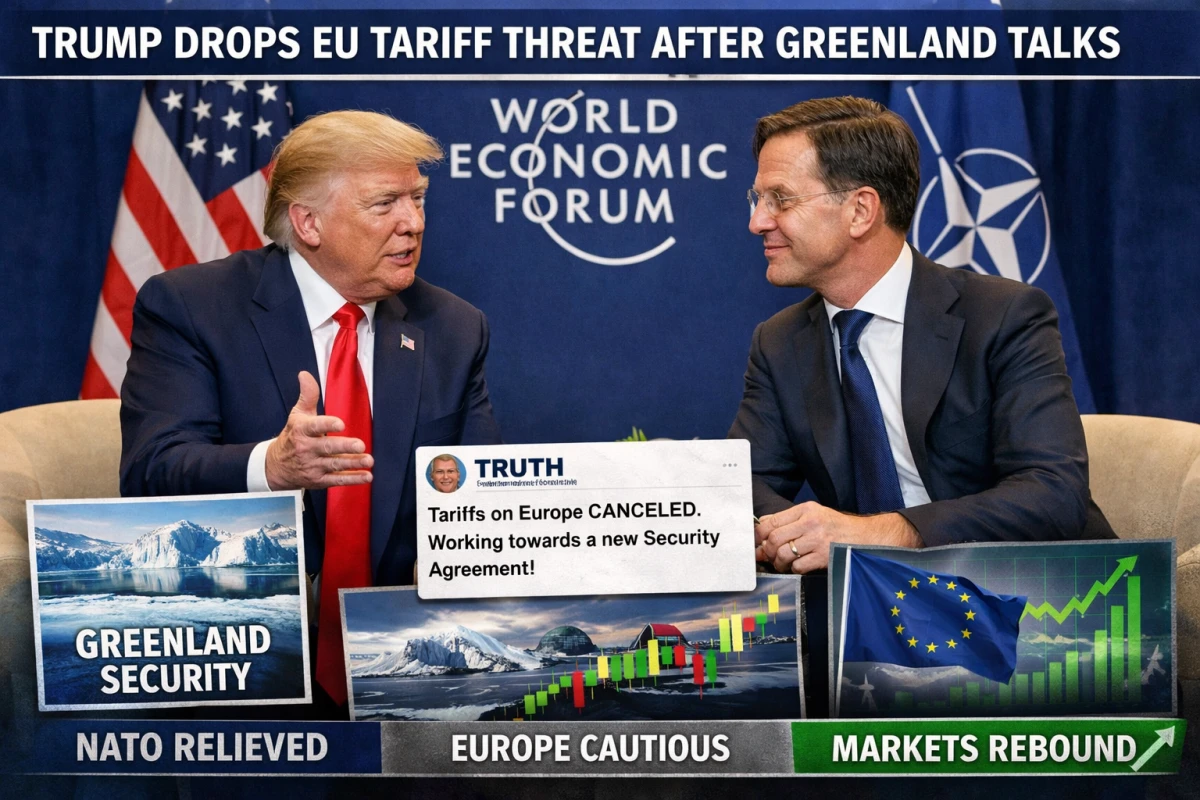
Former U.S. President Donald Trump has reversed his earlier threat to impose tariffs on European allies following renewed discussions on Arctic security and Greenland’s strategic importance. The decision came after a high-profile meeting with NATO Secretary General Mark Rutte during the World Economic Forum in Davos.
In a post on Truth Social, Trump stated that the tariffs scheduled for February 1 would no longer be implemented, citing a “framework of a future agreement” focused on security cooperation. While details of the understanding were not disclosed, the announcement marked a sudden shift from his earlier hardline position.
Only hours earlier, Trump had reiterated his long-standing view that the United States should gain control of Greenland, calling it vital for national and international security. Although he stressed he would not use military force, his remarks raised concerns across Europe and among NATO partners.
Diplomatic Tensions Ease, But Questions Remain
European leaders welcomed the tariff reversal as a step toward stability but remained cautious about Trump’s broader territorial comments. Denmark reaffirmed that Greenland’s sovereignty is non-negotiable, while expressing willingness to discuss security cooperation in the Arctic region.
NATO officials emphasized that Greenland remains part of the alliance structure and that any future dialogue must respect existing international agreements.
Meanwhile, Greenland’s local government urged citizens to remain prepared for uncertainty, publishing emergency preparedness guidelines as public concern grew.
Market and Political Impact
Financial markets reacted positively to Trump’s decision, with European stocks recovering after earlier volatility triggered by fears of a renewed trade conflict between the United States and the European Union.
Political analysts say the episode highlights the fragile balance between strategic negotiation and diplomatic stability in modern geopolitics.
Leadership Lessons for Career Professionals
For job seekers and future leaders, this situation offers powerful workplace and leadership lessons:
1. Flexibility Is a Strength
Strong leaders know when to adjust decisions without losing authority.
2. Communication Prevents Crisis
Clear explanations reduce fear and misunderstanding in teams and organizations.
3. Power Requires Responsibility
Leadership is not about pressure alone — it is about protecting long-term relationships.
4. Confidence Must Be Balanced with Respect
True leadership earns cooperation, not just compliance.
What Candidates Should Learn
In today’s corporate and global environment, employers value leaders who can:
Manage conflict diplomatically
Think long-term
Respect diverse perspectives
Protect organizational reputation
Balance ambition with ethics
Leadership today is not about control — it is about credibility.
Future Recommendation for Young Leaders
Candidates preparing for leadership roles should focus on:
Strategic patience
Emotional intelligence
Crisis management skills
Negotiation techniques
Cultural awareness
The leaders of tomorrow will not be those who speak the loudest, but those who guide the smartest.
Final Thought
Trump’s decision to walk back tariff threats shows that leadership is not about never changing your mind — it is about changing it at the right time.
For professionals, the message is clear:
Growth comes from learning, adapting, and leading with wisdom.
#Trump #TrumpNews #Greenland #GreenlandCrisis #Europe #EuropeanUnion #Tariffs #TradeWar #USTrade #NATO #ArcticSecurity #WorldPolitics #GlobalNews #USPolitics #Diplomacy #Geopolitics #InternationalRelations #Leadership #LeadershipLessons #FutureLeaders #CareerGrowth #SearchTalents #SearchTalentsNews #BreakingNews #WorldUpdate #PoliticalNews